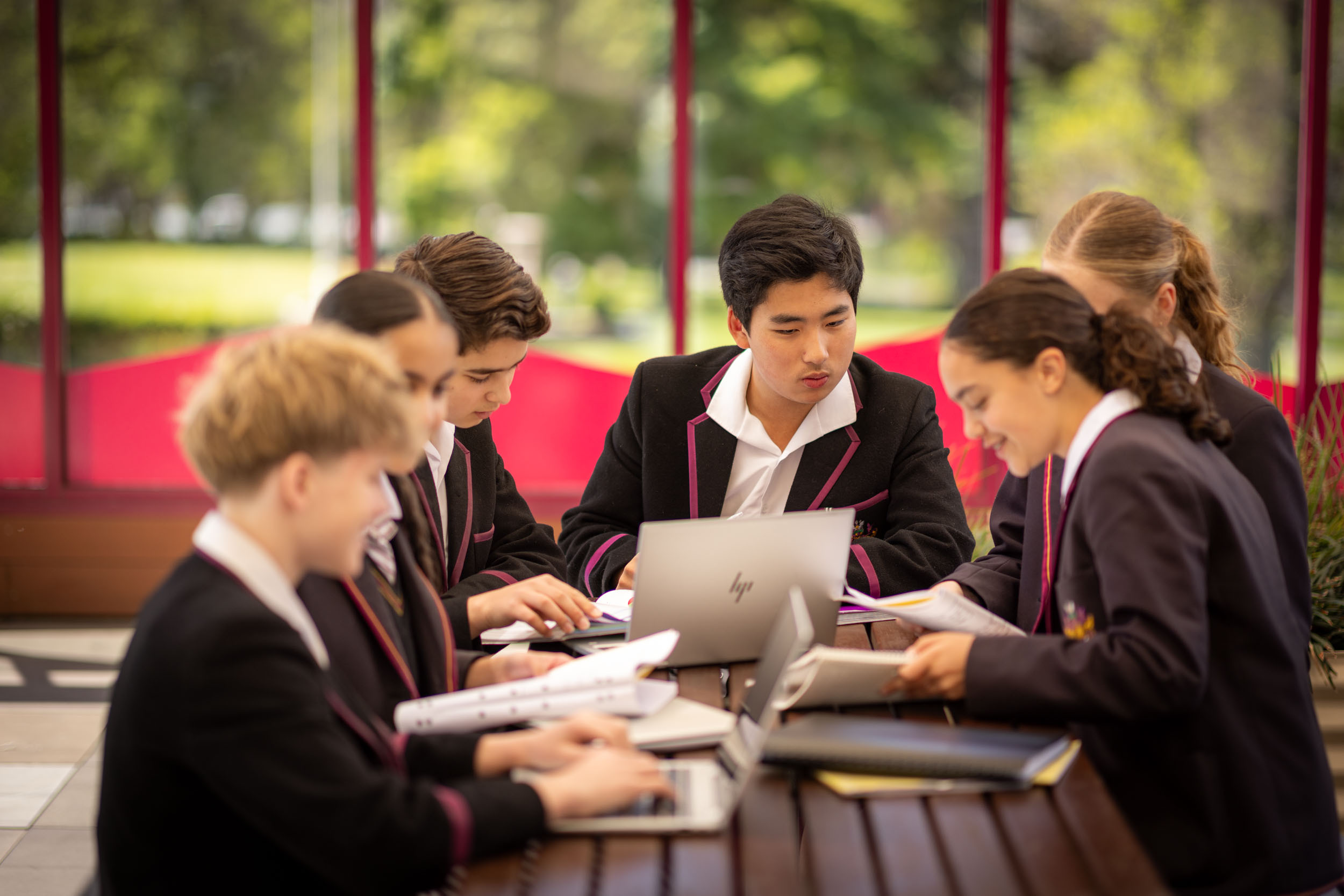
Whether it is receiving a message or watching a video on autoplay, young people are growing up in a world of constant digital distractions. It means that being able to focus on what matters is becoming more important than ever.
“Research continues to reinforce a simple truth: we learn what we pay attention to. Attention is the gateway to learning and wellbeing,” say Nathan Chisholm, Deputy Principal Wellbeing. He adds that the ability to be present in the moment and focus deeply on a task, whether it is music, a challenge, essay or personal project is also highly positive for personal wellbeing.
When students truly focus, they are more likely to understand new concepts, retain information and apply their learning in meaningful ways. “Attention allows the brain to make connections, transfer information into long-term memory and engage in the deep thinking that underpins creativity and problem solving,” says Nathan.
The devices students use provide extraordinary opportunities for learning, connection and creativity. Yet they are also designed to capture and retain focus. Every notification, alert and recommendation competes for a share of their attention. “Researcher Johann Hari describes attention as the foundation upon which much of life is built. If that foundation is continually interrupted, it becomes more difficult to engage in the deep work, meaningful relationships and reflective thinking that contribute to both achievement and wellbeing,” explains Nathan.
Tips to help students focus better
Some practical strategies families can try at home to help students to focus are as follows.
- Build regular ‘device free’ times into daily routines. For example, this could be during meals, homework time or before bedtime. (Research has indicated that using devices before bedtime can affect sleep quality.)
- Encourage children to find enjoyable activities that don’t always need technology. This could be reading a book, playing sport, creating music, walking outdoors or meeting up with friends. Doing this allows young people to exercise different cognitive and emotional muscles.
- Turn off non-essential phone notifications and devices when not in use.
- Create a ‘dedicated quiet space’ at home for students to use when they need to complete homework or activities that require strong focus.
- Help children to improve concentration by taking intentional study breaks. This allows them to let off energy and stress while staying focussed when they return to study.
- Talk about stepping away from devices as restoring a balance. Having a break is not about rejecting technology.
- Discuss with your child how mental wellbeing depends on periods of connection and disconnection. Some of our most valuable thinking occurs not when we are consuming information, but when we have the quieter time to process it.
- Encourage young people to focus on one thing at a time. Trying to multitask makes it harder to be efficient.


