Why do talented girls hold back on the field?
What stops future female athletes and sportswomen from putting in their best performance, and what schools, coaches and parents can do about it.
What stops future female athletes and sportswomen from putting in their best performance, and what schools, coaches and parents can do about it.
On paper, nothing is stopping girls from excelling in sport. Participation rates are rising. Women’s professional leagues are expanding and female sportswomen like Jess Fox, Sam Kerr, Ariarne Titmus and Lauren Jackson have all become household names.
And yet, at training and on match day, something is happening. Talented girls are holding back, not because they lack skill or fitness, but because even in 2026, many young women have been socially conditioned to be cooperative, agreeable and careful not to outshine others.
Being female and competitive is confronting and uncomfortable. Whereas in boys’ sport, aggression and dominance are praised and expected. Displaying those same traits on the field or in the pool as a female can be polarising. So many girls hold back and don’t showcase their raw sporting talent.
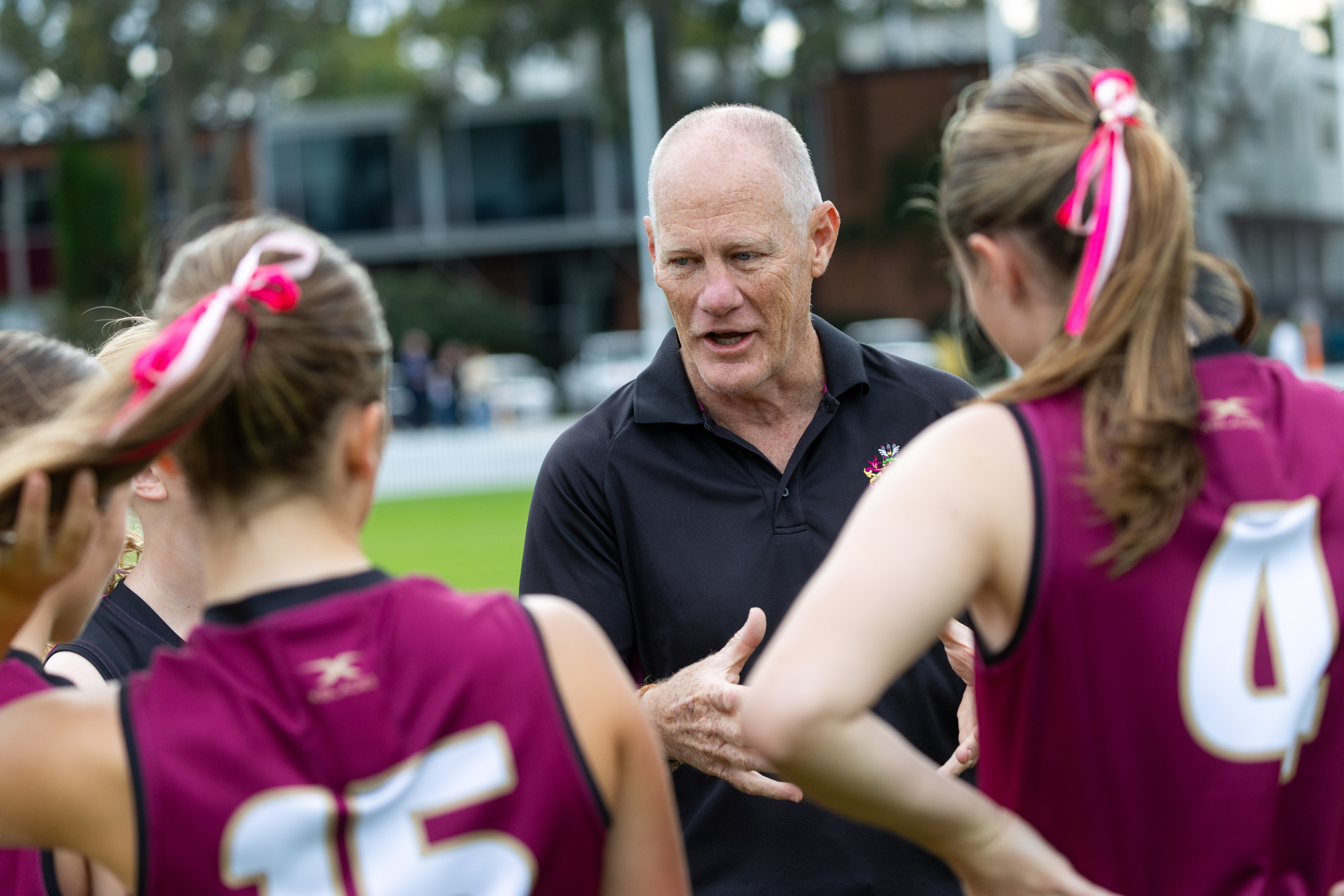
Haileybury’s Head of Coaching and father of three daughters, Nathan Burke, says girls are often reluctant to ‘out compete’ for fear of hurting someone’s feelings or being judged by their peers. Because historically, girls have been encouraged to be good-natured and to avoid embarrassing situations.
Being excellent but not too excellent
On the field, that can translate into striving to be excellent, but not too excellent. It can mean easing off in a contest, pulling out of a tackle, choosing not to take the risky shot, or simply not pushing forward in case the ball actually comes their way.
In boys’ sport, we talk openly about being fierce at the contest, about hunting the ball, about imposing yourself on the game. In girls’ sport, the same behaviour and competitive aggression can be misread as being ‘too much’.
“Competitiveness can attract social consequences. Sometimes the judgement is real and sometimes it is simply the fear of judgement. Either way, the result is the same: talent goes unexplored,” says Nathan.
The other person’s problem
The best sportswomen are often those who have already overcome this hurdle. They are not necessarily more talented, but they are willing to make someone else look second best because they understand that if they win a contest, the other person’s lesser performance is not their responsibility.
“If they go hard and win and somebody else doesn’t look as strong and effective because of that, the better athlete understands that is on the other person,” says Nathan.
“They also understand that if anybody wants to be derogatory towards them because they are better than somebody else in their sport – well, that’s the other person’s problem, too.”
That seismic shift in mindset changes everything.
If we want to create environments where girls truly thrive in sport, we cannot pretend this dynamic does not exist. We must name it, normalise it and coach through it.
Nathan argues that a good coach is not just focused on the scoreboard. They are focused on every individual within the team, what she is capable of, what is holding her back, and how to build her capability over time.
Coaches need to recognise when a player is holding back, have honest conversations about why she is reluctant to perform to the best of her sporting ability and develop individual performance plans that build skills and the confidence to be competitive and aggressive in the sporting arena.
So, what can schools, coaches and parents do to encourage girls to show their full competitive potential in whatever sport they choose, and at whatever level? Because if we are serious about shifting this dynamic, it requires a deliberate and sustained approach across coaching, language and culture, starting with these five practical focus areas:
1. Make the invisible visible
We cannot address what we refuse to acknowledge. Coaches need to openly discuss the social conditioning around being ‘nice’, the fear of judgement, and the discomfort some girls feel about being openly competitive. Bringing it into the open removes its power, says Nathan.
2. Normalise aggression within the rules
Aggression is not a dirty word. Within the rules of the game, it is essential. We use that language freely in boys’ sport. We should use it just as confidently in girls’ sport. Being physical, decisive and dominant is not unfeminine. It is simply competitive sport. It is not embarrassing to give 100 per cent effort.
3. Praise striving, not just outcomes
Many girls hesitate because if they try hard and fail, the embarrassment feels amplified. Trying hard will inevitably lead to more mistakes and mistakes are fine. Coaches and parents must shift the narrative from winning to striving. As Nathan says, trying as hard as you possibly can – even if you lose – should be applauded. Effort and risk-taking must be visibly rewarded.
4. Reframe competitiveness as a strength
If we tell a boy he is competitive, he hears a compliment – some girls only hear criticism. Schools must deliberately reposition competitiveness as a positive attribute. Wanting to win is not selfish, it is a marker of ambition and drive, and winning and being better than someone else simply means that competitors need to work harder.
5. Play the long game
These behaviours are ingrained and they will not shift overnight. Coaches need patience, consistency, self-awareness and they need to reward the small moments when a player goes harder at the contest. We need to build confidence incrementally and over time so that capability compounds.
Sport as training for life
“Sport is a microcosm of life,” says Nathan.
“You win and you lose. You are selected and overlooked. You try, you fail, you adjust and you try again. If girls learn early that it is acceptable to strive, to compete and to take up space on the field, they’ll carry that mindset into classrooms, boardrooms and beyond. We cannot champion female leadership and then subtly discourage female dominance on the sporting field.”
If we want confident, resilient, high-performing young women, we must give them permission to go for it, fully, fiercely and without apology, and we must encourage and support them.
Because if girls can learn to fully compete in sport without fear of judgement, they not only unlock their athletic potential but their potential for life.


In the spirit of reconciliation, Haileybury acknowledges the Traditional Custodians of country throughout Australia and their connections to land, sea and community. We pay our respect to their elders past and present and extend that respect to all Aboriginal and Torres Strait Islander peoples today.
Type on the line above then press the Enter/Return key to submit a new search query
