The thirst for STEM skills in Australia is at all-time high with three-quarters of the fastest-growing occupations relying on STEM-based expertise. From data scientists and cyber security specialists to renewable energy engineers and medical laboratory scientists, the depth and breadth of STEM opportunities continues to rise.
According to the Australian Academy of Technological Sciences & Engineering (ATSE), the number of job opportunities needing Science, Technology, Engineering and Mathematic skills are growing at double the rate of non-STEM job vacancies.
However, there is a serious disconnect between demand and supply.
Major industries relying on STEM expertise, such as mining, manufacturing, electricity, gas and water services, are struggling to fill positions.
Key education and industry organisations across the country, say Australia needs to plug this STEM skills gap – and quickly – as we currently lack the ‘capacity and critical capabilities to be able to deliver on our technology-powered, human-driven potential – now and into the future.’
ATSE has identified four key strategies to turn this situation around, and one of them is increasing and enhancing STEM education in schools. It’s not only about more STEM learning, it’s about how learning happens.
Skills for life
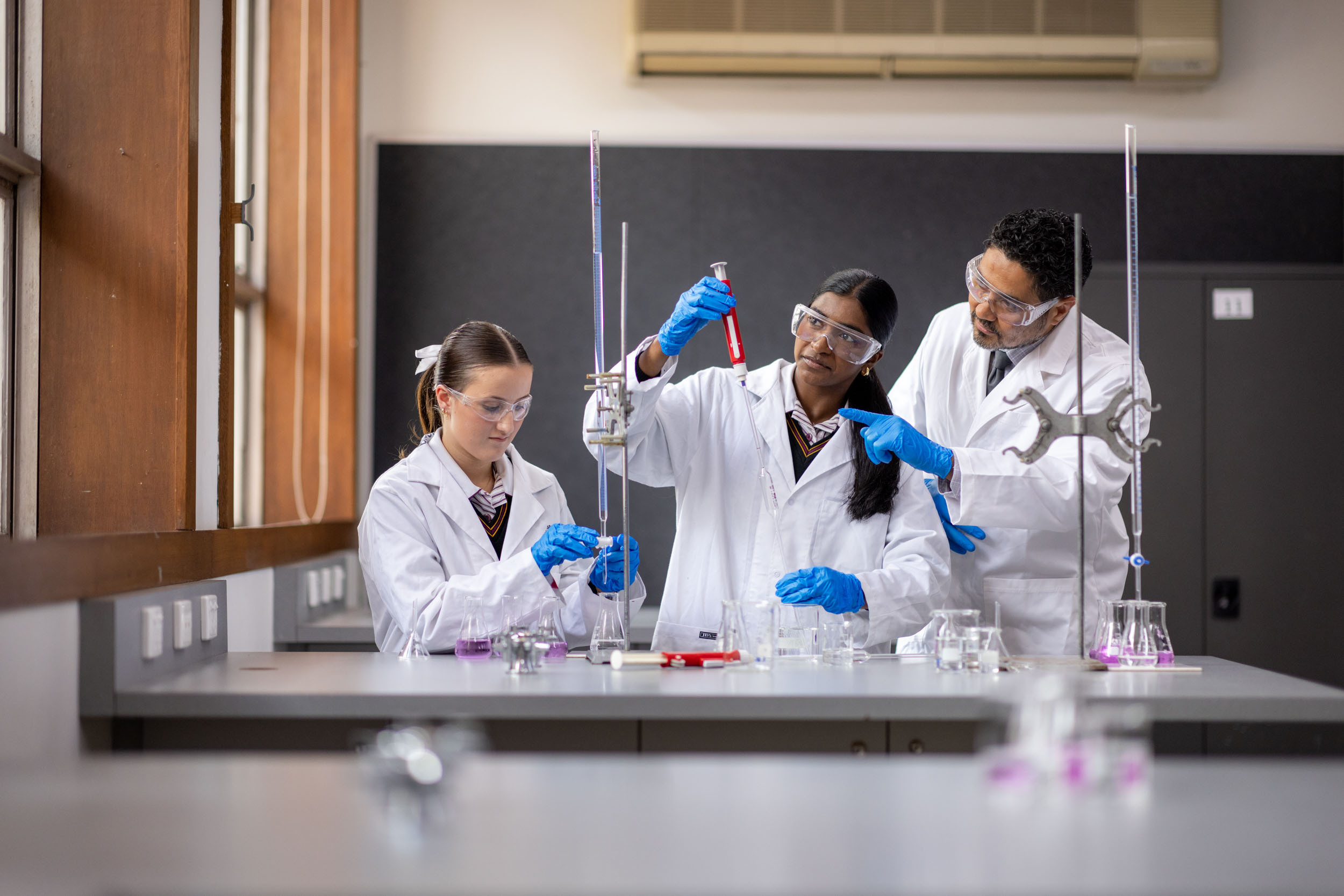
It needs to be hands-on, inquiry-based, challenging and engaging, so students see the value of STEM and its potential as a fascinating future career pathway.
Mia Haravitsidis, Head of Innovation and Entrepreneurship at Haileybury, agrees that developing STEM-thinking is key for every student, even if they don’t ultimately pursue a science, technology, engineering or mathematics career.
“Students need to be problem solvers, to be able to analyse and think critically, and work collaboratively. We want them also to build communication skills and to know how to clearly communicate their ideas. Those are all important life skills,” she says.
Throughout the school year, Haileybury brings STEM to life in laboratories, classrooms, design studios and workshops. STEM Week is also a key part of the curriculum and exposes students to a range of hands-on activities that change each year.
Showcasing the future
The aim of the week is simple – to spark interest in STEM subjects, to showcase potential career pathways, and to challenge each student’s understanding about what STEM is and what it can be.
Alysia Degorski, Deputy Head of Science (Year 5 & 6) at Haileybury Pangea, Haileybury’s online school, says STEM Week is an opportunity for students across year levels and campuses to explore novel ideas and try things they wouldn’t normally try in the classroom.
She says the virtual excursion with the Australian Space Agency fascinated students as astronauts and space scientists spoke about their careers, day-to-day roles and answered questions such as “what do you eat in space?”
“One of Australia’s first female astronauts, Katherine Bennell-Pegg, was a great role model. She provided insight into her career and why she enjoys her role as Director of Space Technology at the Australian Space Agency. Students enjoyed the interaction with the astronauts and the opportunity to learn about a field of STEM beyond the classroom says Alysia.
Possibilities and potential
Guest speakers working in STEM industries, including some Haileybury parents, spoke to students about their experience in civil and structural engineering, mineral engineering, computer science, atmospheric science, molecular biology, geospatial science and investment banking.
“One of our parents is a scientist who creates flavours and smells to represent different brands. Another parent owns a business that designs safety technology to stop truck drivers from falling asleep at the wheel,” says Mia.
“Students were exposed to career opportunities they’d never heard of before and it opened their eyes to the possibilities that STEM presents.”
Supporting smart ideas
The seeds of STEM innovation were also on display during a competition where students pitched their smart ideas to a panel. Innovations presented at the event included a smarter than average smartwatch that organises your day and works out the best time for you to tackle each item on your ‘to do’ list, a program that designs modular, eco-friendly houses built around trees, and an app that helps teens make friends to combat loneliness and bullying.
Other out of the box ideas included an app that locates lost items from a single photo and a device designed to combat water shortages.
The winner was the Year 8 designer of a complex video game with a virtual landscape and characters inspired by Japanese culture and history. It has so far taken two years to develop.
“It’s an action-packed role-playing game based on fast skills and combat,” explains Vihaan, who is enrolled at Haileybury Pangea.
“The biggest challenge so far has been ensuring the characters move smoothly. For months my main character was sliding instead of walking. I’ve learned that nothing comes easily and everything requires hard work, perseverance and determination.”
When schools sow the seeds of STEM innovation, from the early years to the senior years, they are not just shaping individual bright futures, they’re helping to create the thought leaders, problem-solvers and inventors that industries need to keep moving forward.


