Nurturing a global generation
At Haileybury, ‘global competence’ is much more than a catchphrase, with a host of new activities designed to foster global inclusion
At Haileybury, ‘global competence’ is much more than a catchphrase, with a host of new activities designed to foster global inclusion
Even in the busiest metro carriage in Taipei, with commuters standing shoulder to shoulder, priority seats reserved for the elderly, pregnant women and people living with disabilities remain empty.
There is an unspoken cultural understanding that only those who qualify will use them. If no elderly or pregnant passengers board the train, those seats remain vacant for the entire journey, no matter how crowded the carriage.
For Senior School students who take part in Haileybury’s Chinese Language study tour and spend a week in Taipei, this is one of many real-life lessons they learn that illuminate the cultural contrasts between Taiwan and Australia in ways that no classroom discussion can replicate.
Bringing an international outlook to life

Through travel in Taipei, Beijing and a myriad of other places that form part of Haileybury’s extensive student travel program, students come face-to-face with cultural traditions, nuances and expectations that impact daily life.
“Our students initially might see an empty seat on a metro in Taiwan and automatically sit down, because they don’t yet know that if someone gets onto the train who needs that seat then has to ask you for it – you and they both lose face,” explains Stanley Wang, Deputy Principal (One Haileybury).
Understanding the concept of ‘losing face’ in countries such as Taiwan, mainland China and Japan – and how to avoid these cultural faux pas – is an example of Haileybury’s determination to build students’ global competence.
Global competence, far from being a catchphrase without a strategy behind it, sees the school deliberately embedding activities from the Early Learning Centres to Senior School that will develop globally respectful and confident young people. This is not new.
Having an international outlook has been in Haileybury’s DNA for some time, but the strategic implementation of a comprehensive, hands-on global competence program is more recent.
Bursting the bubble
The program is not solely focused on students studying languages either. Global competence involves every student and the aim is simple – it’s about helping students to look beyond the ‘School Bubble’ and to develop the knowledge, skills and respect for other cultures that enable them to travel, work and live anywhere in the world.
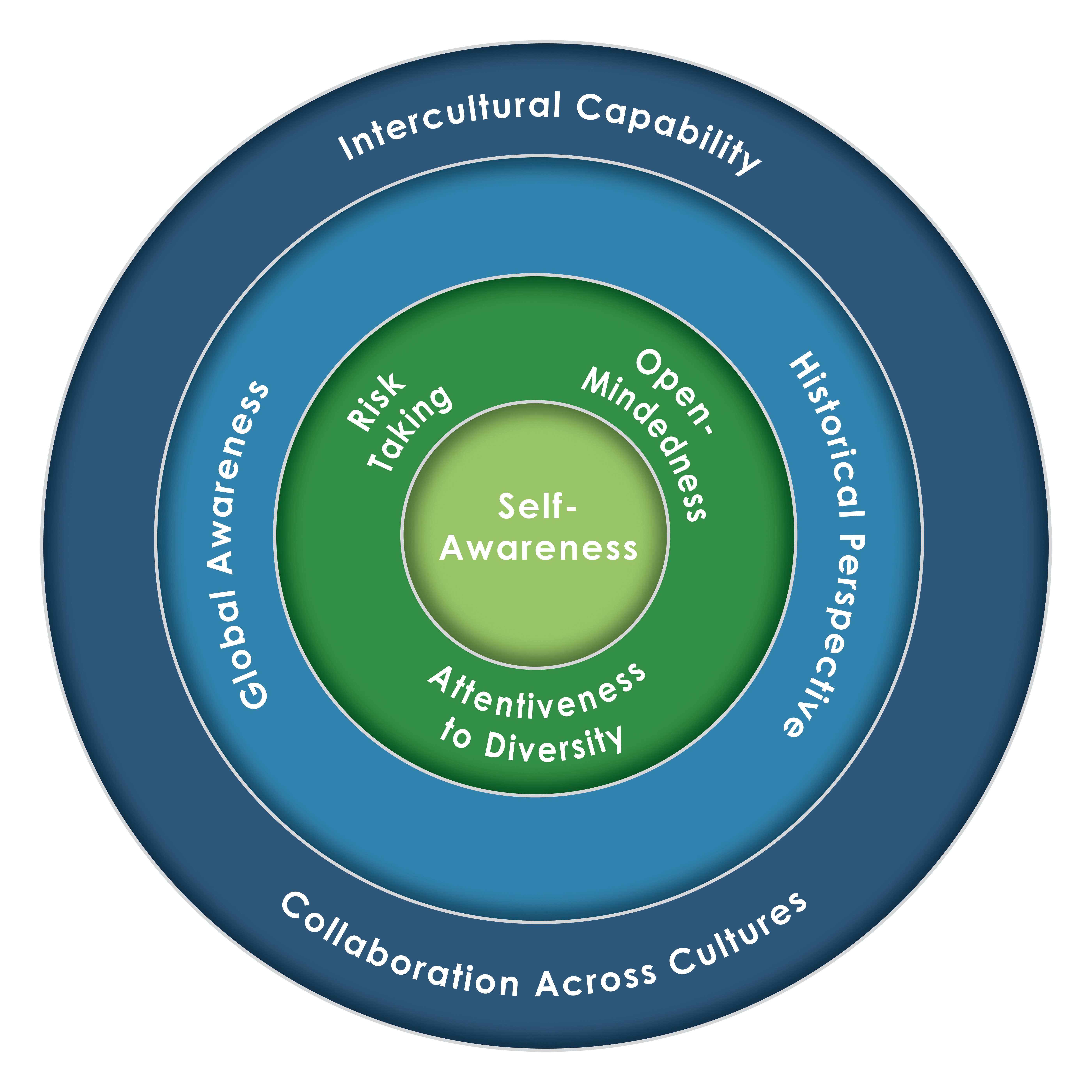
The activities are based on rigorous worldwide research conducted by Global Competence Associates, which they organised into the Global Competence Model™. The model is a series of concentric rings with Self-Awareness at the core.
Radiating outwards, the next ring incorporates Open-Mindedness, Risk-Taking and Attentiveness to Diversity. The other two rings feature Global Awareness, Historical Perspective, Collaboration Across Cultures and Intercultural Capability.
New perspectives and learning curves
Stanley Wang, Dr Stephan Muller – Deputy Principal (Education Research & International), Dr Nonie Tuxen – Head of International Outlook Senior School, the 2025 International Outlook Team, and enthusiastic students developed activities to build each of these eight global competence dimensions.
That team has now expanded to incorporate three new Deputy Heads of International Outlook for the ELC, Junior School and Middle School across Haileybury.
And they are already bringing fresh perspectives.
For example, inspired by international institutions that have clocks showing the time in capital cities around the world, students wanted to create a similar effect in the Haileybury cafeteria at Keysborough. With the help of Visual Arts students and a 3D printer, they designed a clock to represent the Melbourne campus, another to represent Haileybury Rendall School in Darwin, and a clock to represent Haileybury Tianjin in China.
“As the designs were ready for approval, I asked the students if they’d consulted with the student leaders from the schools in Darwin and Tianjin – because if the clock was representing them, it was important they were part of the dialogue,” says Stanley.
“The clock designs were sent to Darwin and the feedback from students there was that none of the plants and animals on the Darwin clock design existed in the Northern Territory. That was far from being a failure – it was a great lesson. It highlighted those Global Competence Model™ concepts like open-mindedness, attentiveness to diversity and the importance of collaboration across cultures.”
Playing games and cultural primers
Other initiatives trialled in 2025 included an International Outlook Club and video exchanges between students and Haileybury’s partner schools in countries such as Vanuatu, Timor Leste and China.
During Languages and Cultures Week, senior students learned to play games from around the world, taught those games to younger students and shared interesting facts about the countries they came from.
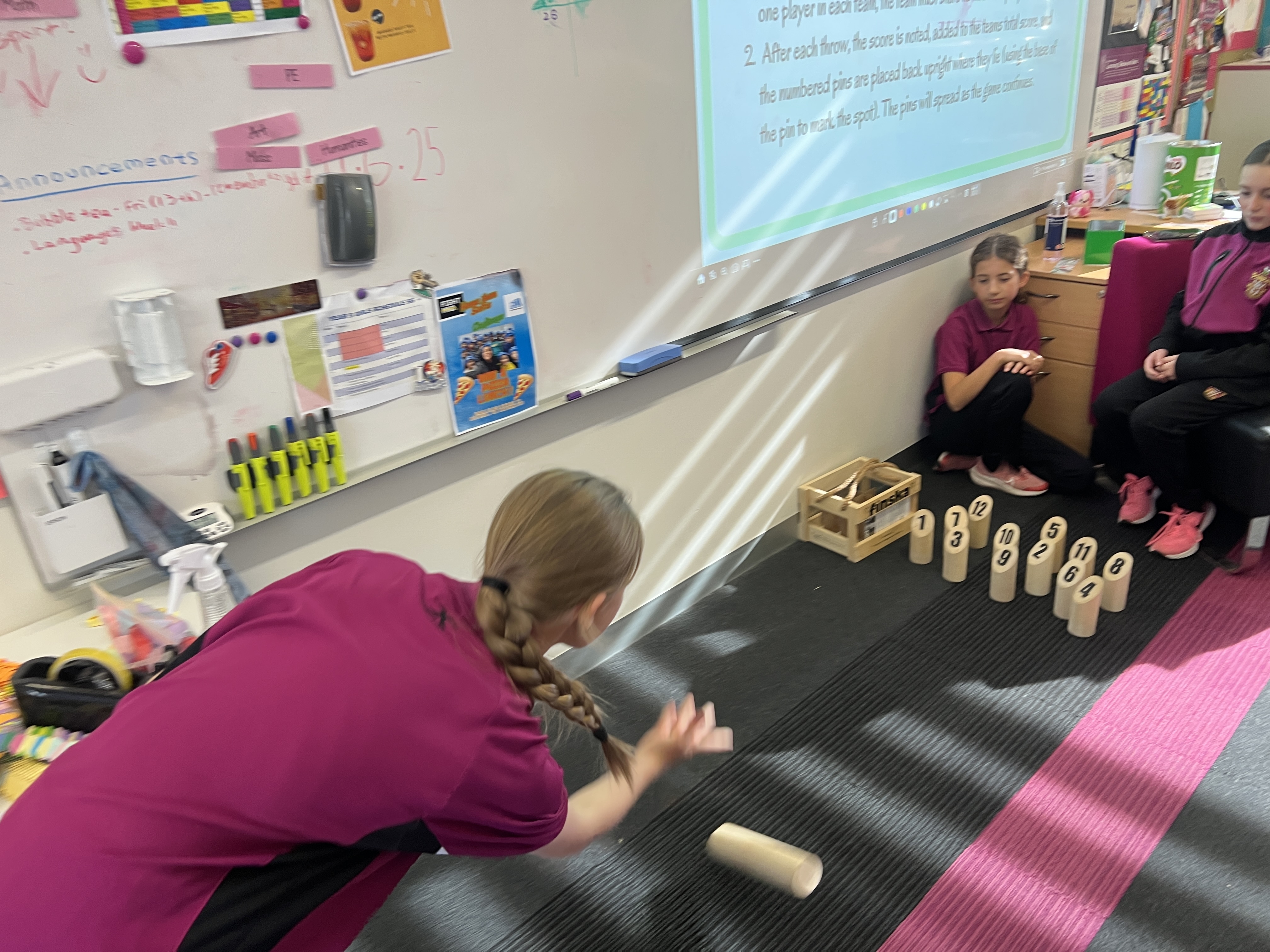
Students learned to play ‘Finska’ from Finland – an outdoor team game where you score points by throwing a wooden log and knocking down numbered pins. They also mastered the popular Gonggi from Korea and a tricky stacking game from Japan called ‘Daruma.’
Haileybury’s extensive Explore and Expeditions program is also raising its global competence focus. Any students taking part in an overseas trip now complete a pre-departure briefing session that brings them up to speed on key issues in their destination country and important cultural traditions, behaviours and expectations– such as not using the priority seat on public transport in Taiwan.
Students also complete a cultural primer workbook.
“Our pilot cultural primer experience was in India last year and students discussed topics like colonialism, linguistic and religious diversity, and social inequity. Each evening, different students divided into sub-groups and led a discussion about what they’d seen that day,” says Stanley.
More to come
The Global Competence Model™ and the activities that will support it are only just beginning. Along the way, Stanley and his now six-person team across the school will assess outcomes and feedback to ensure that global competence becomes second nature to every student at Haileybury.
“We want our students to be open-minded and to think about their contribution beyond Australia,” he says.
“We want to produce a globally competent next generation who understands that people might hold fundamentally different values, who respects differences, who knows the history behind different cultures and who can adjust, collaborate and include others.”


In the spirit of reconciliation, Haileybury acknowledges the Traditional Custodians of country throughout Australia and their connections to land, sea and community. We pay our respect to their elders past and present and extend that respect to all Aboriginal and Torres Strait Islander peoples today.
Type on the line above then press the Enter/Return key to submit a new search query
