What does a world school look like in practice?
Blending Australian curriculum and pedagogy with Chinese educational values, Haileybury Tianjin offers the best of both worlds
Blending Australian curriculum and pedagogy with Chinese educational values, Haileybury Tianjin offers the best of both worlds
Operating a world school is a complex undertaking. For Australian schools delivering education overseas, this means navigating the dual responsibility of offering a high-quality curriculum and effective teaching practice, while also honouring the local traditions, nuances and rich cultural values of the country in which they operate in.
Some of the most progressive and ambitious world schools are taking on this challenge and establishing campuses across Asia, Europe, North America and the Middle East.
While this involves managing diverse cultural contexts, these schools also recognise the tremendous opportunity to deliver a gold-standard, international education to young people who are keen to broaden their knowledge, perspectives and global experience.
Haileybury Tianjin is a world school operating in one of the most regulated and culturally complex education systems. Opening the school in 2013 was a bold step, but since the first students entered the classrooms, Haileybury Tianjin has showcased how a world school can deliver the best of Australian curriculum and teaching practice while fully embracing Chinese traditions and values.
On a practical level, Haileybury Tianjin is also meeting a pressing educational need.
In China’s highly competitive education landscape, access to top-tier university pathways is not guaranteed. Each year, more than 13 million students complete the national Gaokao curriculum and compete for around five million university places.
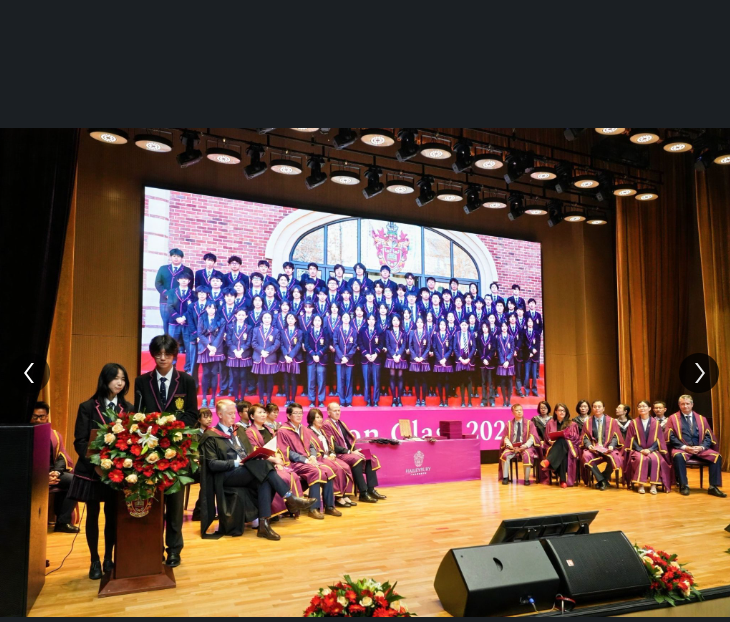
Global aspirations and ambitions
Many families have aspirations for their children to study overseas once they complete high school, and this has accelerated demand across China for schools with a global outlook that deliver strong academic results and globally-recognised qualifications.
Haileybury Tianjin has around 700 students from Years 1 to 12 and more than 60 per cent of students are boarders. Senior students study the Chinese Gaokao curriculum, the Victorian Certificate of Education (VCE), or the South Australian Certificate of Education (SACE).
Around 84 per cent of graduates are offered places at the top 100 world universities, and 70 per cent of Haileybury Tianjin students enrol at Australia’s most sought-after universities.
Balancing philosophies
Operating a school that successfully straddles two different philosophies is no easy feat, but it breathes life into Haileybury’s vision to be recognised as a great world school.
“You can’t be a great world school if you’re not out there in the world,” says Haileybury Tianjin Executive Principal, Andrew McAree.
“Haileybury did a very brave thing in opening this school in 2013. It’s not without challenge, but there is a wonderful tension and balance, and a willingness to understand, appreciate and value each culture.
“Collaboration, acknowledging eastern and western philosophies, developing a strategic vision for the school, understanding nuances, and embracing all this for the advantage of our young people is at the centre of everything we do every day.”
One Haileybury
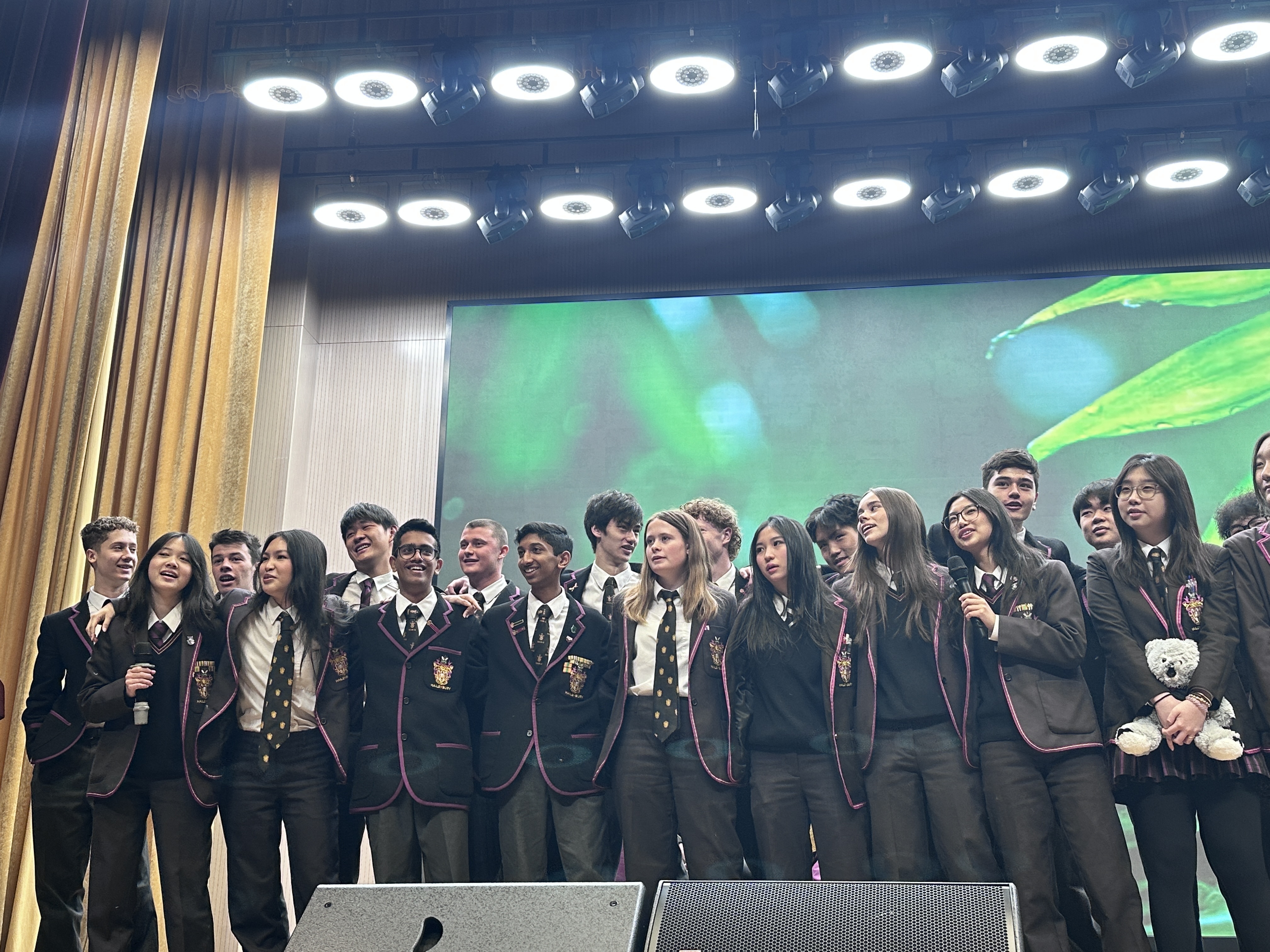
The school’s vision and operations are supported by close integration with Haileybury Melbourne – schools in both countries share resources and professional development. Staff exchanges between Melbourne and Tianjin create opportunities for both Chinese and Australian teachers to broaden their expertise, practice and world perspectives.
Study tours also allow Haileybury Tianjin students to step inside an Australian classroom, glimpse the Australian way of life and visit prospective universities.
“We are a global community where students and staff feel connected, regardless of location,” says Derek Scott, CEO|Principal of Haileybury.
“There is great collaboration between a very strong Chinese staff and an equally strong international staff. Our leadership teams work together across cultural boundaries and the school operates on the fundamental principles of Haileybury that ‘every student matters every day’ and ‘every staff member matters every day’.”
Side-by-side teaching
Haileybury Tianjin blends the strengths of Australian and Chinese education by design, not accident. About 30 per cent of staff are international teachers who work side-by-side in classrooms with experienced bilingual Chinese educators. This is another facet of creating a world school.
“We deliver a curriculum to Chinese students in a bilingual setting, so teachers who come to Haileybury Tianjin from overseas experience a very different teacher placement. Our international teachers are mostly in the Senior School and we have a raft of bilingual teachers, too. Each brings their experience to create a strong and dynamic classroom,” says Andrew.
International and Chinese teachers combine the Confucian foundations valued by Chinese families – benevolence, propriety, trustworthiness, wisdom and respect – with the strengths of Australian education such as collaborative learning, experimentation, critical thinking and explicit instruction – I do, We do, You do.
The result is a genuine intercultural learning model in which Australian and Chinese education systems are understood, visible and valued by students and teachers.
Opportunities outside the classroom
As the Haileybury Tianjin campus spreads over 50 hectares and houses state-of-the-art facilities, it also offers a series of co-curricular and extra-curricular activities. The school has a strong Performing Arts program, students can play sports ranging from football and basketball to ultimate frisbee and curling and there are special interest clubs such as STEM, robotics, debating and ecology groups.
Throughout the academic year, young people can develop interests in social justice and leadership activities, and take part on a national or international stage in competitive events that further stretch their academic knowledge.
From strength to strength
During the next decade, Haileybury Tianjin will continue to be a thought-leader and exemplar of effective transnational secondary education. Student numbers are expected to increase and the school will form even deeper partnerships with international universities. So far, students have enrolled at almost 100 different universities and studied over 150 different majors in the UK, USA, Germany, Canada, Japan and Hong Kong.
“This school has built a reputation for being a caring environment with strong pathways forward for students and that will continue,” says Andrew.
Derek Scott says as the only Sino-Australian school in China, Haileybury Tianjin’s growth and success is a ‘pretty extraordinary achievement’.
“The school flourishes because of good leadership, strong collaboration and a willingness to learn from each other. Stability, good teaching and strong leadership – those are key ingredients of a world school,” he says.


In the spirit of reconciliation, Haileybury acknowledges the Traditional Custodians of country throughout Australia and their connections to land, sea and community. We pay our respect to their elders past and present and extend that respect to all Aboriginal and Torres Strait Islander peoples today.
Type on the line above then press the Enter/Return key to submit a new search query
